
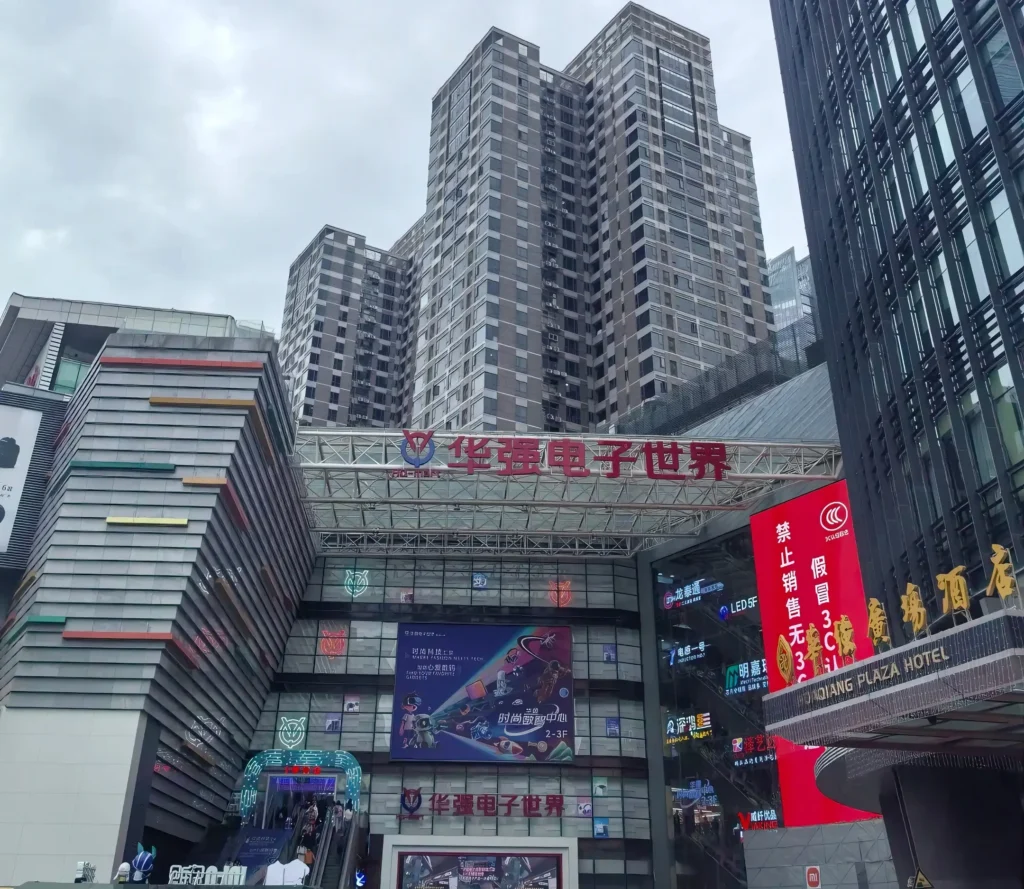
If you’re still convinced that going digital will somehow “rescue” Huaqiangbei by turning it into a clean, transparent supply chain like the official manufacturers, think again. You’ve probably underestimated just how adaptable this place really is.
The reality is that digital tools haven’t pushed Huaqiangbei closer to factory standards. They’ve taken its traditional strengths—the lack of transparency, the flexibility, the sheer speed—and scaled them up dramatically.
Digitalization here isn’t about cleaning things up. It’s purely an accelerator.
A lot of people hoped online platforms would shrink the gray areas and kill off easy arbitrage. But that’s not what’s happening. The first thing digital systems did was make everything move faster, not more ethical.
Inventory updates, price feeds, and channel connections now happen in real time. Traders no longer need to physically run around the markets; the system chases demand for them.
During chip shortages, getting information even 24 hours earlier can add 20% or more to margins—that’s the kind of edge digital tools amplify.
Prices look more transparent online, but in practice, pricing has become sharper and more targeted. The same part can carry different quotes depending on who’s asking: market rate for strangers, premium for urgent orders, friendly discounts for regulars.
The game hasn’t disappeared; it’s just become more algorithmic and efficient. Huaqiangbei is starting to feel less like a wholesale market and more like a trading floor.
Counterfeits? They’re still around, but the game has moved to a technical level. Digital platforms encourage photos, batch records, and third-party test reports—not because they eliminate fakes, but because they lower risk enough to close deals faster.
Listings with proper verification sell roughly 30% quicker than those without. Trust is shifting from personal relationships to something you can quantify and price into the transaction.
Where Huaqiangbei really shines now is in handling unplanned demand. Official channels are great at big, scheduled, compliant orders. But sudden needs—discontinued parts, substitutes, prototype runs, overseas emergencies—are what Huaqiangbei dominates.
Digital networks have turned this from individual hustling into something that can be scaled and replicated across regions.
Bottom line: Huaqiangbei hasn’t been tamed or transformed by digitalization. It has simply weaponized its chaos more effectively.
What used to run on guts and connections now runs on data, speed, and the ability to price uncertainty perfectly.
That’s why it remains so hard to replace. Underestimate it, and you’ll pay the price